

By Natalie Bayley
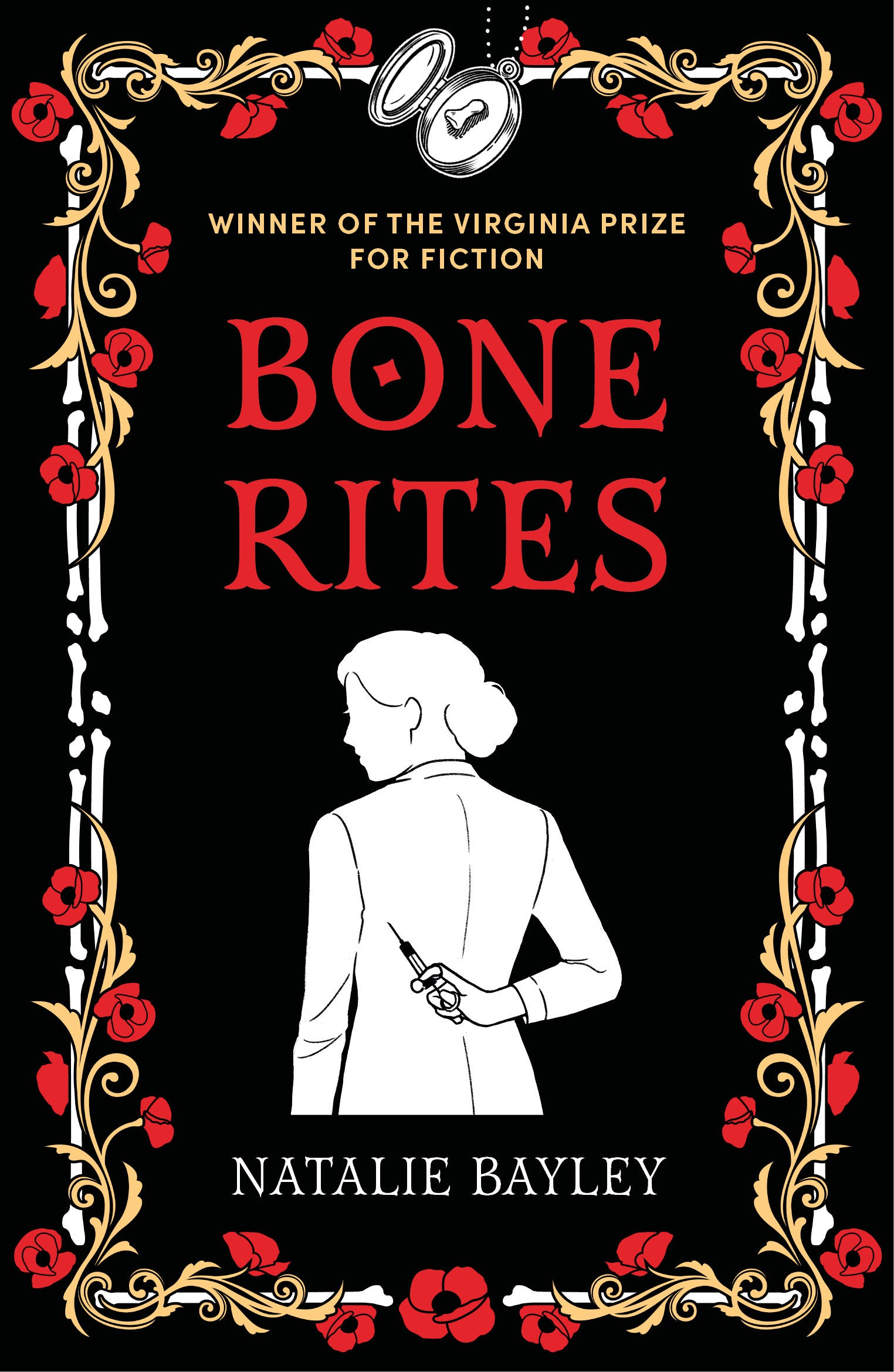
I set my award-winning (ahem, I still love saying that – thank you Aurora Metro’s Virginia Prize for Fiction) novel, Bone Rites, in the Edwardian and post-Edwardian period because I’m fascinated by that era. Writing historical fiction is like jumping in a time machine and living another life for a while. And while the so-called ‘golden era’ of 1901-1914 was followed by a horrifying war and a flu pandemic that killed an estimated 5% of the world’s population, it was a wild, experimental time of frenetic social revolution and technological invention. It was also a time of intense secrecy for most of those whose sexual preferences stepped outside the bounds of mainstream convention. And secrecy is interesting.
When you write in the past, research is EVERYTHING. You can take nothing for granted: what people wore, ate, how they travelled, communicated, worked and loved. Fortunately, I’m obsessed with research. Finding out exactly how, where and with whom a posh, English, bisexual woman might have taken opium in Paris in the post WW1 period took me weeks of research. In the end, the reams of fascinating information I uncovered is no more than a couple of sentences in Bone Rites. But they are CORRECT sentences. Why, you might be thinking, don’t you just make it up? Because the moment I assert a detail that you know to be wrong, I’ve broken our author-reader bond. You don’t trust me anymore, and why should you?
Take bones, for example. Bone Rites, features a skeleton made of bones from various people and I initially called it, Two Hundred and Six Bones. I was pleased with this title until I found out that a typical teaching skeleton only has about 180 bones. There are several tiny fiddly bones in our hands, feet and ears that can’t be included. That could’ve been a massive research fail. I also now know the relative weights of various body parts. Most adults for example, have heads that are heavier than their arms, but nowhere near as heavy as one of their legs. Fact. Legs are HEAVY. I also watched videos and read books on surgical procedures. I don’t recommend doing this if you have a delicate stomach, but if you are going to write it you have to get it right. You may never WANT to sever a man’s head from his spinal column, but I like to think if you had to, reading my book won’t give you the wrong idea of how to go about it.
The other thing about writing the past is that you have to be careful if you include real people. You can’t lie. You can embellish, extend, extrapolate, sure, but you can’t actually represent people in a way that’s not authentic. And that means doing a ton of – you guessed it – research. But one of the best parts of doing research for a historical fiction novel is finding out about cool people you’ve never heard of.
In Bone Rites, my protagonist, Kathryn, wants to study medicine in 1912. That wasn’t very easy for a girl back then. After much research, I came across the fabulous Dr Elsie Inglis and her medical school for young women in Edinburgh, Scotland. I read her biography and realised I had stumbled on a total legend of a woman. In fact, I loved Elsie Inglis so much, she became an important character in the book. Much of Kathryn’s activities during the First World War are based on the true-life story of Dr Inglis and the series of flagship war hospitals she set up, staffed entirely by women. Elsie was also a very keen advocate for women’s right to vote. This also wove itself into the story – when we first meet Kathryn
she’s languishing in London’s Holloway Jail, where so many suffragettes were incarcerated for their beliefs.
I think it was Kate Atkinson who said that she reads dozens of books for her historical fiction novels, but before she starts writing she sets them all aside and allows her imagination to fill in that research scaffold. I think that’s good advice (although I always double check my facts!) In Bone Rites, Kathryn is a woman of her times, but she can also talk to our times. She’s so frustrated by her inability to be her true sexual self, by her lack of power in a patriarchal world, that she breaks all their rules and does what she wants. She’s a bad girl, sure, but she does what she needs to do in a very bad world.
I rather admire that, don’t you?
About Natalie Bayley:
Natalie Bayley is the author of Bone Rites, Lolita’s Daughter, The Secret Life of Grandmothers, The Witch Who Saved Paris and The Lady Lyttle Murder Mystery series. Her dark thriller Bone Rites was selected for the 2019 Blue Pencil long list, went on to be shortlisted for the 2021 Blue Pencil First Novel Award and was long listed for the 2021 Caledonia Prize before becoming the Winner of the Virginia Prize for Fiction 2022.
Natalie lives in NSW, Australia where she teaches English, enjoys ocean swimming and whispering to cats.