Many of us encounter Marilyn Monroe every day. For those of us who are fans and who work with film, perhaps that is not much of a surprise. But this week alone, in January 2026, I have encountered her in multiple A.I. videos on Instagram, on a popcorn container at an Everyman cinema, and poignantly recalled by rock icon Debbie Harry in a podcast conversation about her inspirations. Marilyn Monroe endures as an omnipresent influence and a beloved idol, and her life continues to inspire numerous films, plays, television series, novels, and biographies. The fascination with her death, and its associations with celebrity, politics, and the Mafia, as well as her troubled mental health and widely reported addictions, ensures that Marilyn remains fodder for gossip, suspicion, and conspiracy theories. But far beyond this is the joy and affection which she generates through her film roles and her nomadic, independent lifestyle, which we know more about now than ever.
Marilyn left the majority of her personal possessions to Lee Strasberg and his wife Paula, so that he might distribute them to her friends, colleagues, and ‘those to whom I am devoted’. Strasberg’s third wife, Anna, auctioned the bulk of the estate at Christie’s in 1999, selling over 570 items for over $13 million. Further items were auctioned by Julien’s Auctions, with the final auction taking place in 2016. These items have become objects of desire for collectors and fans all over the world, and some of the most high-profile items, such as the sheath-like dress worn to sing ‘Happy Birthday Mr President’ to President John F. Kennedy in 1962, continue to attract controversy and notoriety.1 It was the jottings, diaries, and poetry published in Fragments in 2012 that gave the greatest insight into Marilyn’s personality, and which perhaps contributed the most to a reassessment of her character and lifestyle that continues to this day. It marked the first time that Marilyn’s own voice, expressed through tortured thoughts, witty poems, and reflective mantras, could be seen and heard in the public sphere, and suddenly this other side of her began to receive attention. Intimate and personal, and undoubtedly not meant for public viewing, these notes reveal Marilyn to be pensive and thoughtful, creative and analytical. She was a serious and sad person, committed to the artistic life, and to the pursuit of personal truth. Riddled with insecurities, her self-knowledge seems bleak, but her determination is unshakeable.
1 Catherine Shoard, ‘Kim Kardashian accused of doing ‘permanent damage’to Marilyn Monroe’s dress Kardashian story’, The Guardian, 14 June 2022. https://www.theguardian.com/film/2022/jun/14/kim-kardashian-accused[1]of-doing-permanent-damage-to-marilyn-monroe-dress
I can’t really stand Human
Beings sometimes – I know
they all have their problems
as I have mine – but I’m really
too tired for it. Trying to understand,
making allowances, seeing certain things
that just weary me.
I can and will help
myself and work on
things analytically no
matter how painful – if I
forget things (the unconscious
wants to
forget – I will only try to remember)
Discipline-Concentration
– Fragments, p.59
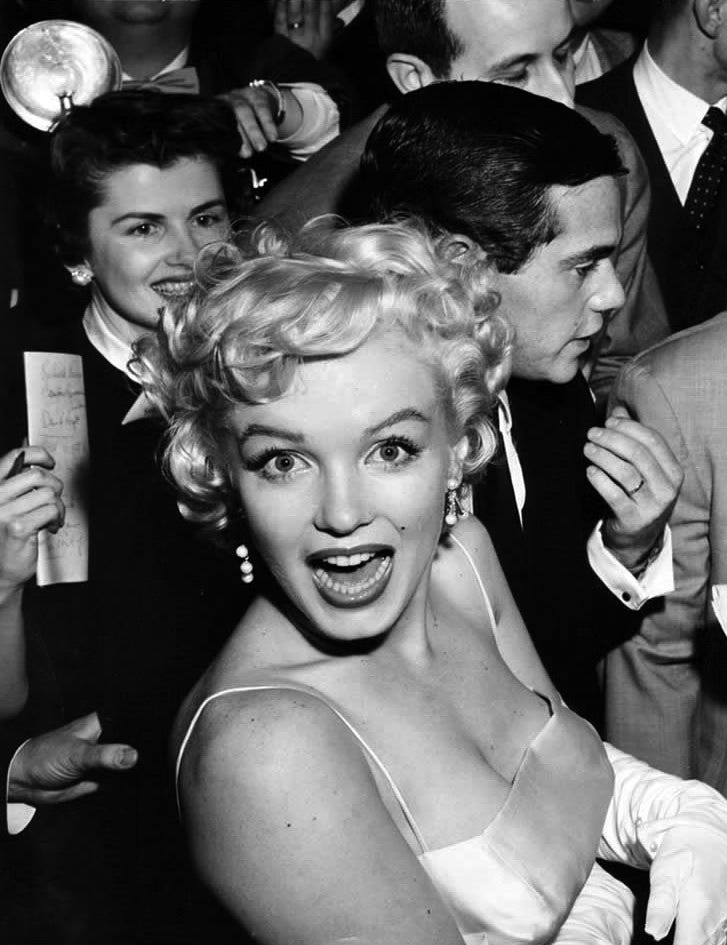
It is these qualities that have made Marilyn Monroe even more popular than ever. Hers is an image that many have tried to co-opt for their own purposes – commercial, creative, cultural – but the strength of her character now dominates her story in most contexts. She has been mooted as a proto-feminist with varying degrees of success, but she has undoubtedly come to be known for her strong desire to do more dramatic work in quality plays and films, and to escape the dumb blonde role in recurrent musical comedies.
Her rebellion against studio bosses and Hollywood restrictions was most evident in her move to New York in 1954 and the establishment of her production company, Marilyn Monroe Productions, in 1955, with her friend and favoured photographer, Milton Greene. This period tells of a young woman who lived as an artist, studying acting at the famed Actors Studio, run by Lee Strasberg, while dating Marlon Brando and Elia Kazan. The black-and-white photographs of Marilyn in New York during this time are a marked contrast to the colour-saturated cheesecake shots of her early career and the high-glamour glossiness of Gentlemen Prefer Blondes and How to Marry a Millionaire. These New York photographs show Marilyn with bleached, scruffy hair, without a bra, conversing intensely in diners, and wrapped up against the cold in the subway. Wearing Ray-Ban Wayfarer sunglasses and headscarves, she paints the picture of an actress striking out on her own, boosting her acting credentials and shifting her social and romantic register.
To project tragedy onto her whole life is to miss out on the multiple possibilities that she offers us today. In conversation with Bella Freud, when asked about what she enjoyed about Marilyn Monroe, Debbie Harry cites her silliness and her sophistication: ‘here she was in this highly pressurised position, in a very competitive industry, and a little girl from nowhere pretty much, and yet she was always sweet and childish in many ways, but yet very sophisticated; and she would come up with some real cracking responses but they were delivered well, they were delivered nicely, and I always thought this was a sign of genius.’ 4 Harry’s respect for Marilyn’s abilities and qualities is indicative of the strength of character that many continue to find so inspiring and relatable.
4 Fashion Neurosis, 7 January 2026
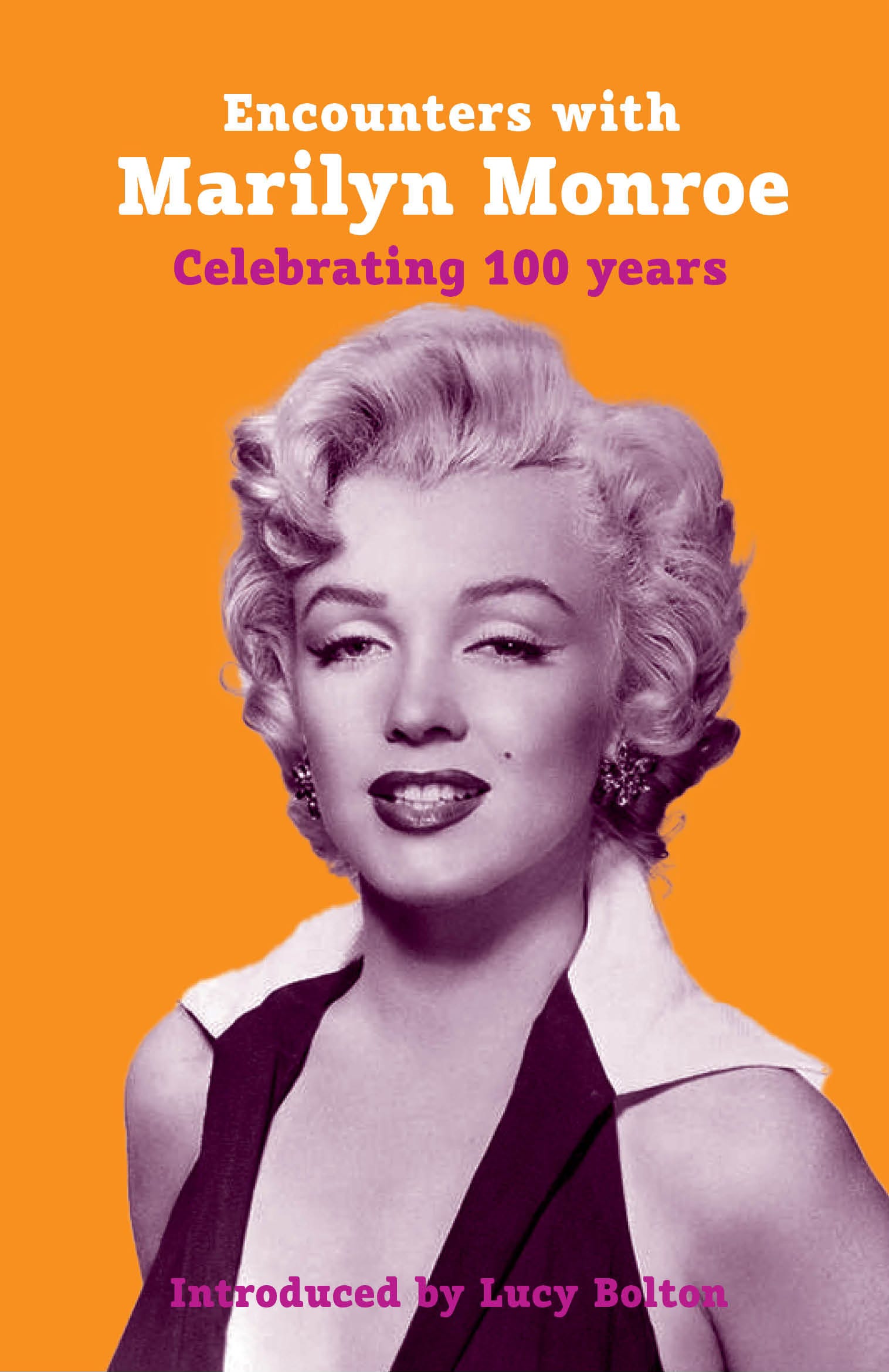
Encounters with Marilyn Monroe is a testament to the lasting potency of Marilyn’s character and work as well as her ubiquitous image. The 21 chapters demonstrate the striking range of creative work that she inspires, and how many elements there are to her persona.
The scholars, students, artists, collectors and fans – and these descriptions are not mutually exclusive – show a dedication and commitment to the honest critique of Marilyn and her influence. Their voices all speak to individual encounters with her legend, but also personal connections to her representation and cultural repute. This collection is not a work of apology or hagiography, but rather an array of perspectives that both revisit many facets of the perennially alluring star and suggest more than a few new ones.
To find out more about Marilyn Monroe and read the pieces form the amazing array of contributors, you can get our book below.